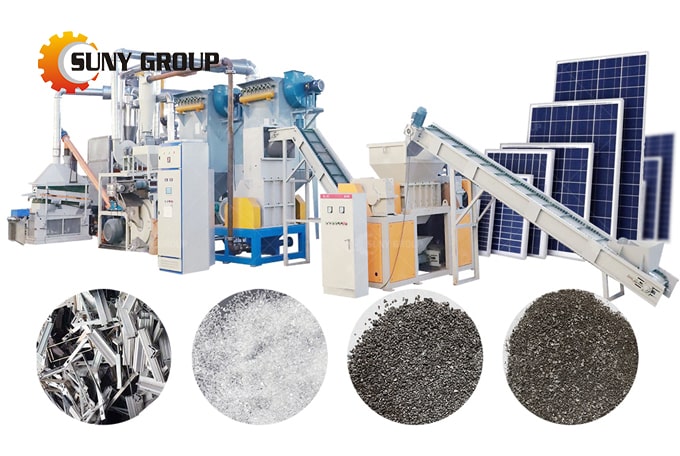
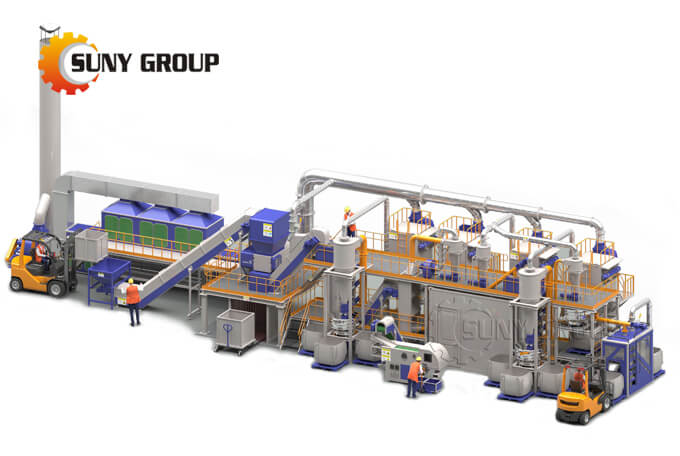
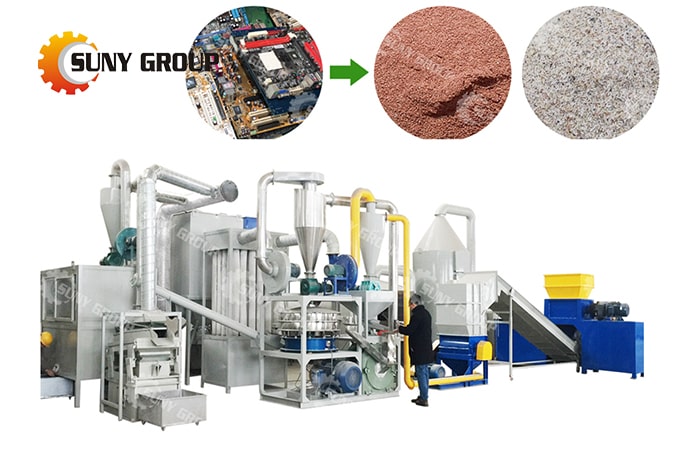
Currently, the vast majority of decommissioned photovoltaic (PV) modules are of the crystalline silicon type. Within these modules, the value of the silver alone accounts for approximately 47% to 50% of the entire panel's value; furthermore, they contain numerous other valuable materials, including silicon, aluminum, copper, tin, and lead. Through resource recovery, we can not only reduce our reliance on virgin mineral resources but also lower carbon emissions throughout the entire product lifecycle.
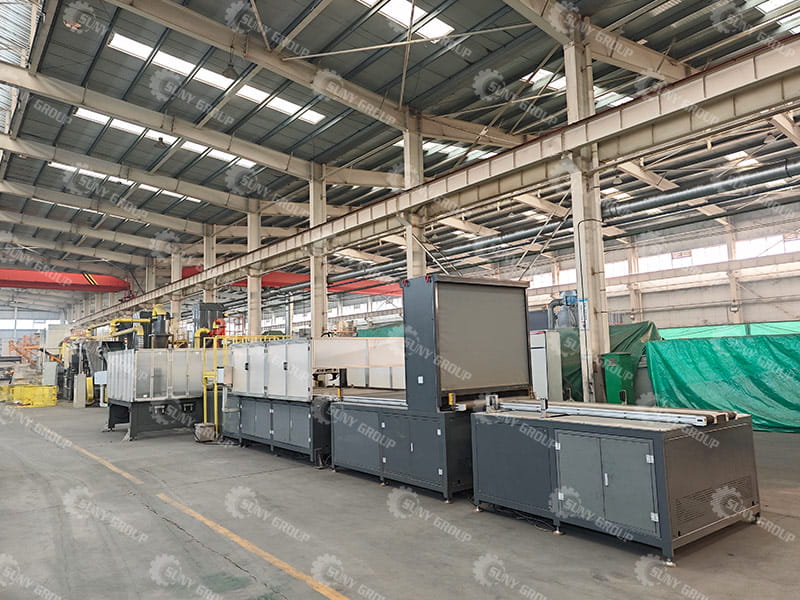
The recycling process for PV modules typically involves three main stages: disassembly, extraction/refining, and conversion. Below, we will briefly outline the key aspects of these three stages, drawing upon current technological capabilities.
1. How to "Disassemble" the Laminated Sandwich Structure
PV modules typically consist of several layers—including glass, EVA encapsulant film, solar cells, backsheets, and aluminum alloy frames—bonded together by high-strength adhesive films. Disassembly represents a critical challenge in the PV module recycling process; currently, the mainstream technologies employed for this task are physical methods, pyrolysis, and chemical methods.
Physical methods involve using mechanical means to directly crush and grind the PV modules, followed by separation techniques—such as vibration, magnetic separation, and electrostatic separation—to isolate different materials (metals, semiconductors, glass, and organic substances). This approach is simple and efficient; however, it typically results in products of lower purity and offers limited recovery rates.
Pyrolysis involves heating the modules in an oxygen-free or low-oxygen environment to decompose the adhesive films bonding the layers, thereby enabling the separation of materials such as glass and solar cells. While this method yields high recovery rates for the materials, it is energy-intensive and may generate hazardous gases during the process.
Chemical methods utilize organic solvents to dissolve the adhesive films, facilitating a gentle separation process that helps preserve the structural integrity of the solar cells. However, some of the solvents used can be toxic, necessitating the proper treatment of the waste liquid generated during disassembly.
2. Purification: "Smelting" Out the Real Gold and Silver
Once the PV modules have been separated into preliminary fractions through disassembly, the glass and aluminum frames can be remelted and recycled into new glass or aluminum materials. Other high-value materials—including silicon, silver, and various rare metals—require further purification. After impurities such as the silver grid lines and surface coatings on the solar cells are removed using acid or alkali treatments, the remaining material undergoes smelting to extract pure silicon, which can then be utilized to manufacture new photovoltaic modules. As the most valuable metal found in photovoltaic modules, silver can be recovered through processes such as dissolution in nitric acid, precipitation, and electrolysis, achieving a purity level exceeding 99%. The remaining rare metals (including tin, lead, and copper) can be separated and recovered using hydrometallurgical or pyrometallurgical techniques.
3. High-Value Conversion: Transforming Waste into Wealth
The materials obtained through purification can undergo high-value conversion via a variety of methods. Waste silicon can be processed into silicon powder, silicon carbide ceramics, or anode materials for batteries; recovered silver can be directly utilized in the production of new photovoltaic pastes or electronic products; the oil and gas generated from the pyrolysis of encapsulant films can serve as fuel; the residual solids can be repurposed as construction materials; and the PET plastic from backsheets can be converted into chemical feedstocks or novel materials.
Suny Group : http://www.sunyrecycle.com/,All rights reserved。