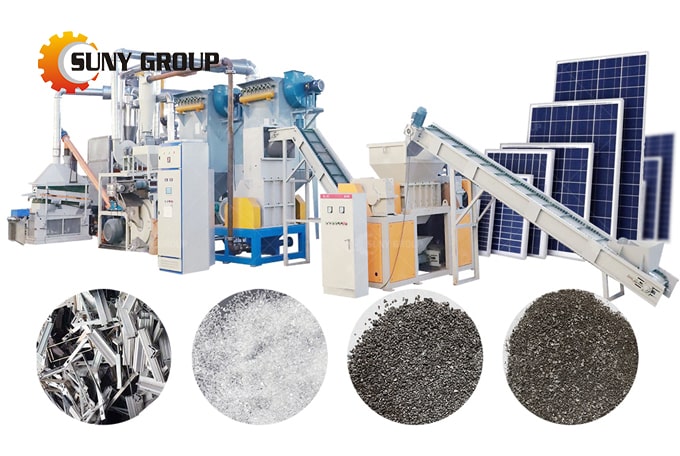
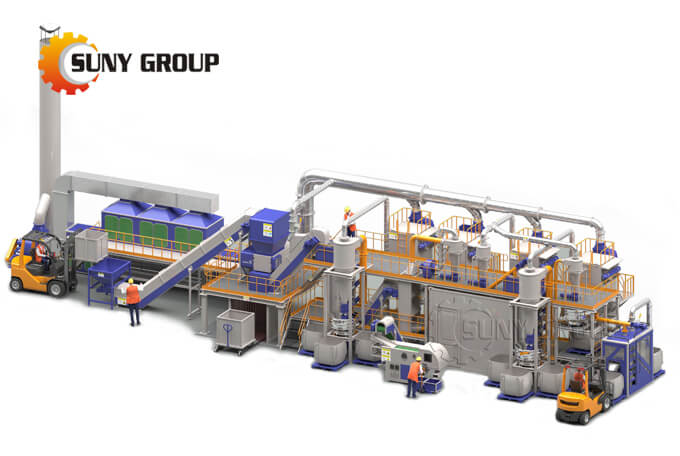
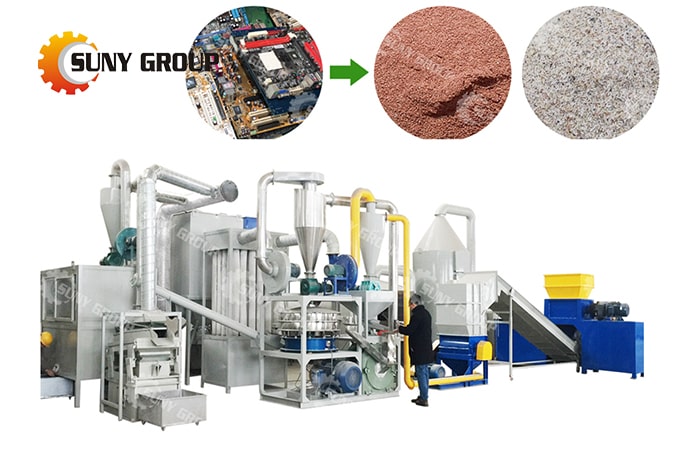
There are three common methods for separating aluminum-plastic panels: thermal separation (incineration), chemical separation, and dry physical separation. Among these, the dry physical separation method is the most environmentally friendly and efficient.
The thermal separation method involves exposing the surface of the material to an open flame to soften the plastic layer, which is then manually peeled away. This process requires an incineration time of approximately one hour. Furthermore, the quality of the aluminum-plastic material is inevitably compromised by the heat exposure. The manual peeling stage poses safety risks—specifically the potential for burns—and can also damage the material itself, potentially leading to material waste.
The chemical separation method utilizes a specialized separation agent. The aluminum-plastic material is immersed in this chemical solution and continuously agitated to ensure complete saturation by the agent. Under standard room-temperature conditions, a soaking period of 2 to 3 hours is required for the aluminum and plastic to separate. Once the aluminum and plastic components are retrieved, they must be allowed to drain so that the chemical solution flows back into the working tank; subsequently, both the plastic and aluminum undergo a water-washing process. The chemical separation method is procedurally complex; moreover, the separation agent is corrosive, presenting inherent safety risks during the process while offering relatively low separation efficiency.
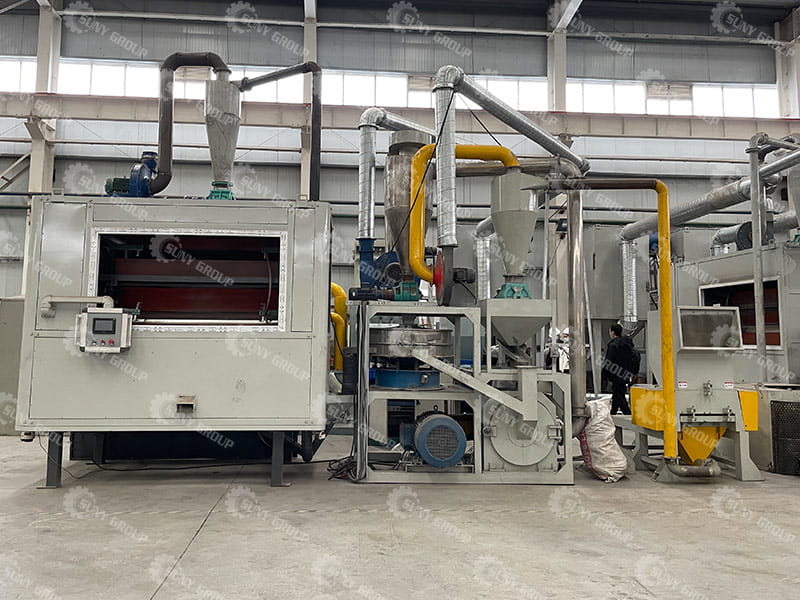
The dry physical separation method employs specialized aluminum-plastic separation machinery to crush, separate, and sort various aluminum-plastic products. The equipment features a fully automated PLC control system, allowing for single-operator functionality. Users simply feed the aluminum-plastic products into the machine, which then executes the crushing and separation stages, ultimately achieving a complete separation of the aluminum from the plastic.
Compared to the thermal and chemical separation methods, the dry physical separation of aluminum-plastic panels is significantly more environmentally friendly, safe, and efficient. It enables the rapid processing of large volumes of aluminum-plastic panels and diverse aluminum-plastic composite materials within a short timeframe. Characterized by its simple operation and high efficiency, it has emerged as the most preferred method within the recycling industry.
Suny Group : http://www.sunyrecycle.com/,All rights reserved。
Share This News, Choose Your Platform!
Welcome to visit Suny Group website. If you are interested in our equipment, please feel free to contact us!